Prospect List Building With Waterfall Enrichment Sequencing
Use multiple data providers in sequence to fill gaps single databases can't cover alone.

Building a prospect list with waterfall enrichment sequencing is a system design decision. Provider order, downstream routing and verification thresholds shape how much of the broader coverage yields contact data the team can use. The strongest design starts with a qualified target list, spends enrichment credits according to segment fit, and admits records to outreach only when they meet the sequence’s requirements.
Why a single data provider produces a structurally incomplete prospect list
No single B2B data provider has the same coverage across every geography, company size, industry vertical and seniority band. A provider with strong coverage of US technology companies may have much thinner coverage of European SMEs or manufacturing contacts. An outbound program built on one database therefore inherits that database’s uneven reach, even when its overall contact count appears substantial.
The missing records also create work outside the database. Reps spend time filling gaps in lists, while leadership may only see the cost when reply rates slip. Google and Microsoft have tightened sender requirements around spam complaints and authentication, so decayed contact data also creates more immediate risks to sender reputation and domain delivery. A purchased database is not a permanent asset. Treating its records as complete and lasting assumes that access to them gives the team market coverage it can count on.
What waterfall enrichment actually does and how the cascade logic works
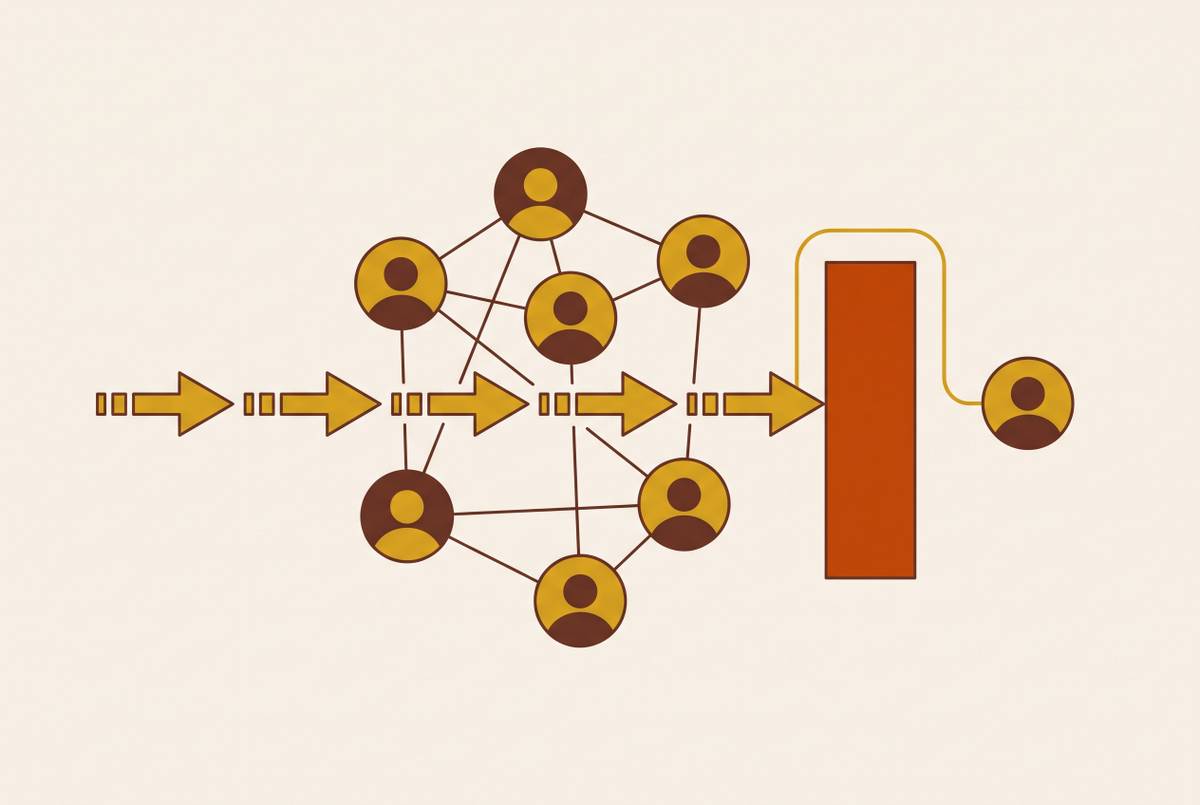
Waterfall enrichment fills gaps in coverage by querying providers in a set priority order. Contacts come in with basic identifiers such as name, company and domain. The first provider receives the query. If it returns an acceptable match, the record stops there. Otherwise, the record moves to the next provider. The process continues until a usable match is found or the available providers are exhausted.
The cascade avoids redundant lookups on resolved records. It also allows routing rules to skip a provider when geography or company size makes that provider unsuitable. ZoomInfo’s enrichment tools guide describes sequential vendor routing, conditional logic, layered coverage and credit efficiency as core capabilities. OpenAI’s Keith Jones more than doubled enrichment coverage when implementing Clay, illustrating how a multi-provider approach can recover records that one source misses.
A sequential waterfall queries providers one at a time, keeping lookup costs lower but taking longer when successive providers miss. A parallel waterfall queries multiple providers simultaneously and scores the results for confidence. The same guide presents parallel execution as a way to address vendor-management complexity and credit unpredictability in sequential stacks. The choice changes how much the system spends and how long it waits, but either model must return data the team can use, with more than just filled fields.
Why sequence order is a design decision with direct cost and coverage consequences
Provider order determines which lookups the system pays for before it finds an acceptable result. If a premium provider sits first, every record reaches that provider, including records a cheaper source could resolve. The expense occurs before any fallback decision. Moving a suitable lower-cost provider forward can reserve premium lookups for records that actually need them, but price alone is not a sufficient ordering rule.
The first provider should also have a strong historical hit rate for the target segment. The best provider to start with for US enterprise SaaS contacts may differ from the best one for EMEA manufacturing mid-market contacts. Segment fit governs the useful comparison. A low-cost provider that repeatedly misses adds a lookup without resolving the record, while a provider with better segment coverage can shorten the cascade.
Dynamic ordering uses the hit rates seen in each segment to rerank providers, so the sequence can change from one segment to the next. Conditional rules can also skip unsuitable providers, reducing wasted credits and missed coverage. For EMEA records, compliance adds a prior constraint, so routing should favor compliance-first providers rather than maximize find rates without regard to eligibility.
Keeping those rules up to date takes time from RevOps or engineering. The counterweight is the recurring cost of a static sequence optimized for the wrong audience. In practice, teams should therefore define ICP segments by geography, industry and seniority before selecting providers, then map provider strengths to those segments.
How confidence thresholds and stop logic determine when a record is actually usable
Finding a match is not the same as finding a usable contact. A provider can return a stale email address or an unverified phone number, making the record look complete without making it ready for outreach. A waterfall that stops on field presence conceals that distinction. It can report more coverage while fewer records are safe to use.
Stop logic should depend on verification and a defined confidence threshold. If an email fails real-time mail server verification, the cascade should continue even though the email field is populated. The returned data must also match the outreach channel. An email-only sequence requires a usable email address.
Email and phone enrichment each need their own rules for what to accept. Verified mobile numbers are harder to source across most providers, so phone thresholds should account for higher miss rates without causing the entire record to be abandoned automatically. That does not justify accepting an unverified number. It requires distinguishing the record’s overall status from the status of each contact field.
Before teams build the system, they should set three record states. Verified and usable records can move toward outreach, while matched-but-unverified records go in a hold queue to be checked again. Records still unresolved after every eligible provider has been tried should go to manual research or be left out. These states make the stop condition an operational decision rather than an incidental response from the first provider that returns something.
How provider depth and diminishing returns shape the right stack size
Additional providers usually recover a shrinking share of unresolved records. The fourth and fifth providers contribute less incremental coverage than the first and second, while API management, credit tracking and endpoint maintenance remain recurring obligations. More providers are not automatically a better design. Another provider’s usefulness depends on whether it closes a specific gap in the ICP’s required coverage.
ZoomInfo GTM Studio runs a parallel waterfall across 25+ vendors with intelligent scoring, fitting enterprise teams that want a consolidated engine. Leadsforge, Salesforge’s enrichment product, combines waterfall enrichment with ICP and conversational search and intent signals, fitting teams that want targeting and enrichment in the same platform. Clay offers a visual workflow builder across 150+ data sources, fitting RevOps teams building custom sequential enrichment logic.
Cognism focuses on phone-verified mobile numbers, EMEA coverage and GDPR compliance, so it makes sense as an anchor for sequences aimed mostly at Europe. BetterContact aggregates 20+ premium providers and charges credits only when data is found, fitting teams seeking pay-on-result economics. UpLead has both real-time email verification and technographic filters, so it fits teams that need verified contacts on a tight budget.
Channel requirements also affect the necessary depth. A list requiring both email and verified mobile numbers may need more providers, or a specialist later in the chain, than an email-only list. A narrow ICP can support an affordable, directly maintained two-provider setup, whereas a broader stack creates more work as endpoints, rate limits and response formats change. Managed platforms absorb that maintenance load. For stack sizing, the recommended approach is to map geographic and vertical requirements, build to three or four providers, and test a batch before committing the full list.
How compliance requirements constrain provider selection and routing logic in regulated markets
Provider eligibility must be established before routing optimizes cost or coverage. Passing prospect identifiers through a non-compliant secondary provider creates exposure for both the team running the waterfall and that vendor. A late position offers no exemption. GDPR and CCPA posture therefore need evaluation for every provider that can receive a record.
Neither GDPR nor CCPA categorically bans B2B cold email. Under GDPR Article 6(1)(f), legitimate interest is a basis for B2B prospecting, with relevant safeguards including professional relevance, disclosure of the data source and a clear opt-out. That legal framing does not make every enrichment source interchangeable. Teams still need to weigh what contact data a source covers and how it uses that data when choosing a provider.
Dropcontact illustrates how a compliance position can shape product architecture. It limits enrichment to professional B2B email addresses and performs enrichment without using or storing a contact database. That narrower scope changes what the provider can return. For European teams, it is a design characteristic to evaluate against the required contact fields.
Geography can then act as a routing trigger. EMEA records should reach compliance-certified providers first, but that ordering does not make an ineligible fallback acceptable. Provider review also needs to recur because sourcing practices and certification status can change.
How ICP quality upstream determines whether a waterfall-enriched list can actually power pipeline
Enrichment quality is bounded by targeting quality and provider depth. A technically excellent waterfall can return valid contact details for people who will never buy. Verification cannot correct the wrong account choice. Teams therefore need to define the ICP before choosing an enrichment tool, even though what providers can do often gets their attention first.
The starting evidence should come from closed-won deals over the last 12 months. Teams should identify the industries that closed fastest, the company sizes that expanded and the roles that signed. Those patterns then need translation into sourceable firmographic, technographic and signal-based filters. A useful ICP describes accounts that can be found and screened.
Buying signals add timing to that fit. Recent funding rounds, aggressive hiring patterns and technology adoption events can identify companies in an active buying motion rather than accounts that match only the demographic profile. A well-matched account is not necessarily ready now. Enriching without attention to timing can produce accurate contact data well before a purchase decision is likely.
Some platforms run enrichment when a buying signal appears. This connects data acquisition to a reason for outreach.
How to sequence the build without losing the operational order
The build should follow the dependencies established above, beginning with targeting and ending with records ready for the intended outreach channel. Define the ICP before touching an enrichment tool. Use firmographic filters including industry by NAICS code, employee count, revenue range and geography. Add current tools and platforms as technographic filters, then funding, hiring and adoption events as signal filters. Specify negative criteria for industries, sizes and geographies that should be excluded.
LinkedIn Sales Navigator supports account identification by industry, headcount, geography and technology usage. Use multiple channels so the target list does not inherit one source’s entire view of the market. The output remains an account list at this stage. Contacts enter the process only after the accounts qualify.
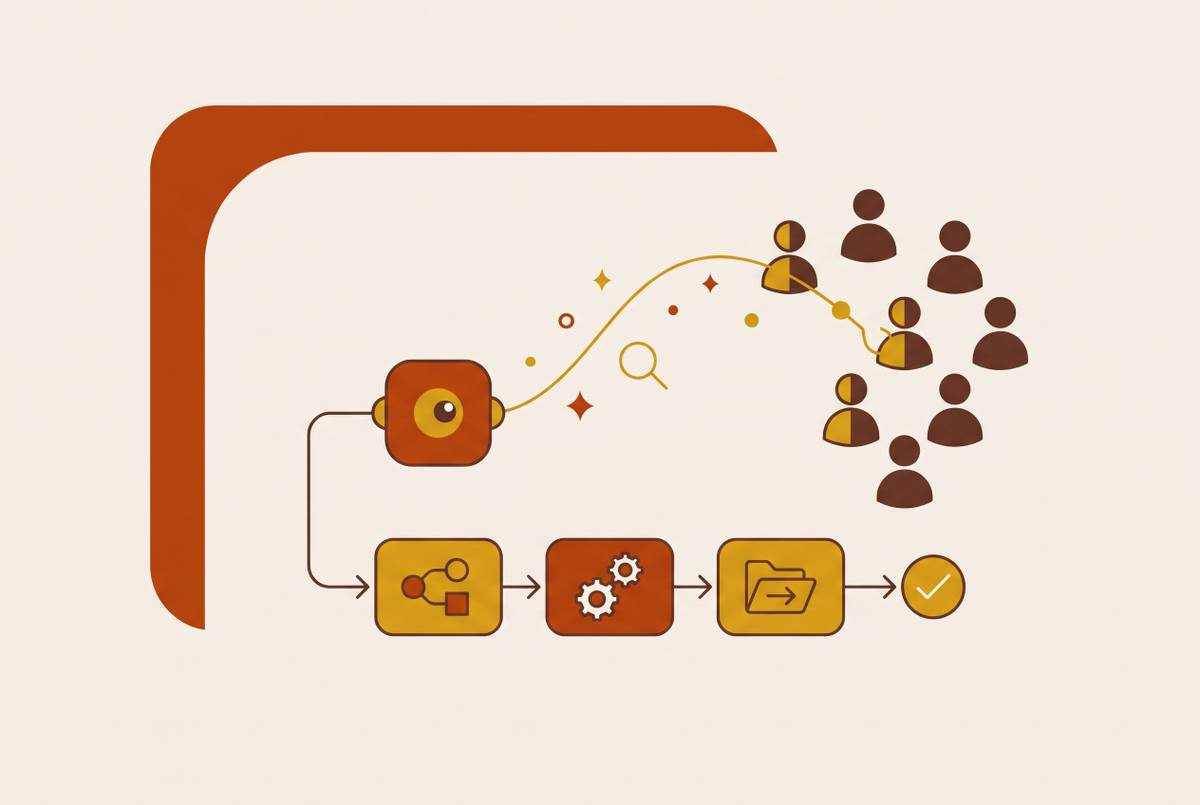
Then run the waterfall designed for those segments. Use geographic eligibility rules before lookup, then order the eligible providers by how well they cover the geography, industry and seniority band at hand. Make verification part of the stop condition. After enrichment, route verified records toward outreach, matched-but-unverified records to a hold queue, and unresolved records to manual review or exclusion.
Score the usable records before assigning them to reps. Apply ICP scoring to distinguish contacts that fit the highest-value customer profile, and incorporate intent data into prioritization. This separates readiness from priority. A contact can satisfy every verification requirement without being the strongest account for immediate attention.
Finally, budget and contract for ongoing enrichment. Contact data decays, so a list left untouched steadily loses usefulness. Where signal-triggered enrichment is available, supplement the batch schedule by running the waterfall when a buying signal appears. The architecture then responds to changing account conditions, producing sequence-ready records when there is a reason to act.