AI Agent Memory and ICP Feedback Loops in GTM Platforms
Agent memory lets GTM platforms transform static ICPs into continuously learning models.
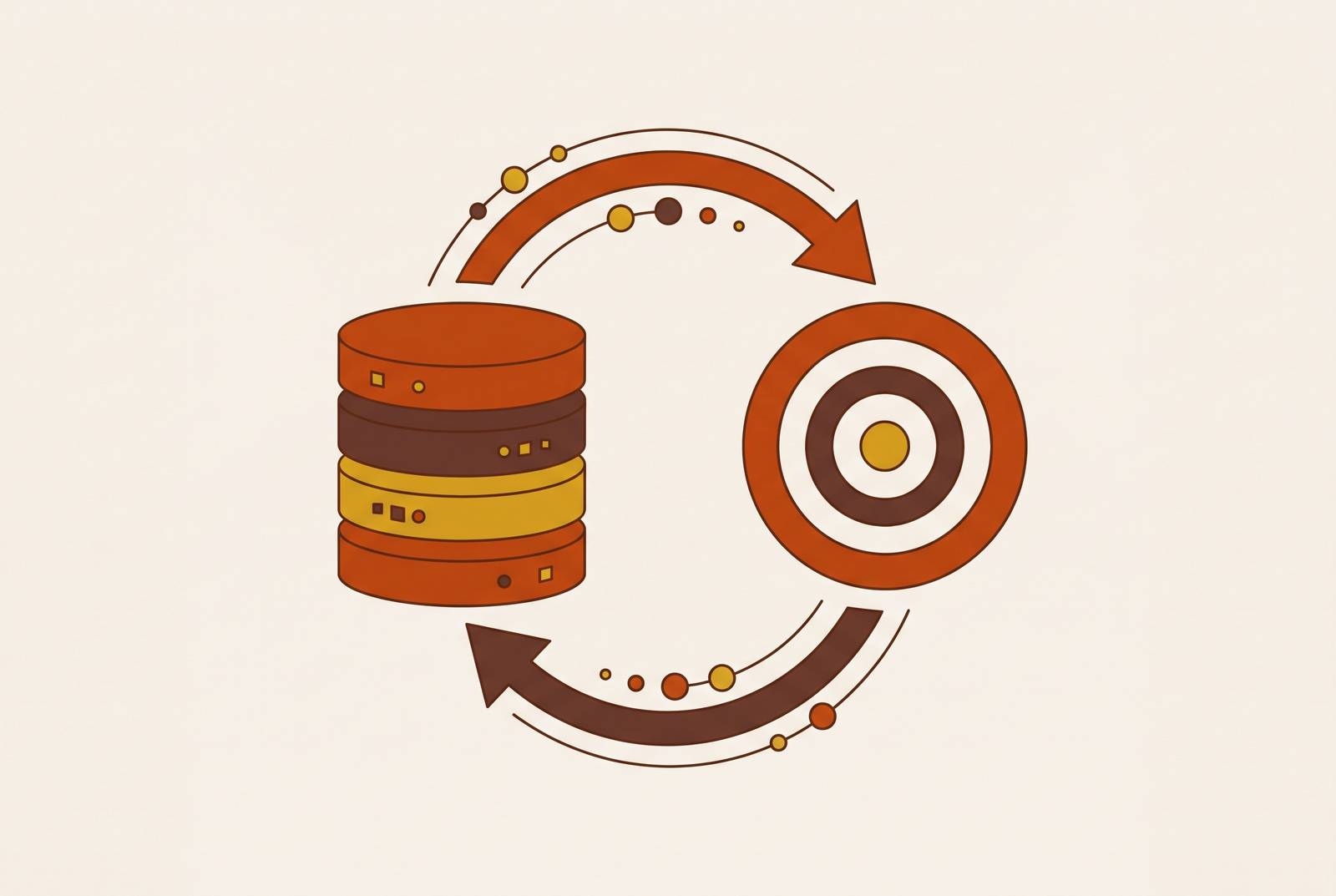
AI agent memory architecture is what closes the ideal customer profile feedback loop in GTM platforms. It turns the ICP from a static document into a model that prospecting and outreach agents can read, update, and act on continuously. But memory alone does not make that model self-correcting. Improvement depends on distinct memory functions, reliable feedback, and human governance over what the system learns.
Why the ICP has always been a static document — and what that costs GTM teams
A traditional ICP begins with a point-in-time research exercise. Win/loss interviews, firmographic clustering, and sales intuition go into a document that teams review quarterly or annually. Between reviews, reps and campaigns work from assumptions that do not change when the market does. New evidence has to wait until the next review.
The gap is structural. Lost deals, recurring objections, and changes in which accounts convert appear in CRM fields, call transcripts, and campaign reports, but do not automatically revise the customer definition. ZoomInfo's GTM AI guide identifies an earlier break in that chain. Much of what teams need to know about accounts, including calls, emails, intent signals, and executive changes, never reaches the CRM.
That adds costs to prospecting, scoring, and outreach. Each step that follows uses the same flawed assumptions, and doing more work faster spreads them further. What would it take for the ICP to update itself?
What agent memory architecture actually is, and why it is the missing piece
A standard AI workflow ends when it produces an output. Without memory, the next run retains nothing about what the previous run did or learned. An agent with memory instead observes, acts, stores the result, and uses that result to change its next action. That persistence is the missing link between execution and learning. It gives customer evidence a route back into decisions.
The CoALA framework formalizes four memory types used by production agents. In-context, or working, memory holds the material needed during one run, such as an account under research, its current signals, and a draft being scored. Episodic memory records past events, including a failed outreach angle or what a prospect said on a call. These serve different time horizons within the workflow.
Semantic memory holds durable facts and concepts, such as an account's technology stack or a segment's security-review requirements. Procedural memory holds rules and skills, including the scoring rubric and routing logic. Knowing a customer and knowing what to do are separate functions. A stored fact does not, by itself, define an action.
Enterprise GTM deployments also surface an emerging fifth type, organizational context memory, which the framework does not fully address. It keeps definitions that are governed, along with data lineage, cross-system entity identity, and policies on who can have access. Its job is shared meaning across the stack. Without it, agents cannot reliably know that account records in the CRM, marketing automation platform, and intent platform refer to the same business.
How each memory type maps to a specific ICP feedback function
Working memory handles real-time fit assessment during a prospecting run. It holds the account's current funding announcement, job change, or intent spike together with the live ICP definition. The agent can then score fit without a human handoff. This is where immediate processing speed is won. It is not, however, where accumulated evidence becomes a lasting revision.
Episodic memory gives pattern detection its historical record. It preserves failed angles, recurring objections, and workflows that broke before escalation, so an agent need not repeat approaches it has already seen fail. Subagent/GTM's 2026 practitioner review describes a pipeline subagent that reads emails, meetings, opportunity changes, and contact roles from CRM activity. It finds stale deals, single-thread risks, and bad close dates by using the activity on record. Recognizing a deal going cold requires that history.
Semantic memory is where the ICP itself lives. Firmographic criteria, persona definitions, segment rules, and technology requirements move from a document passed around the team into a knowledge base they share. Usermaven's 2026 GTM platform review describes a SaaS team finding that paid social generated signups but not revenue, while organic search and partner referrals generated high-value accounts. Once validated, such a pattern becomes a semantic update available to downstream agents.
Procedural memory translates validated patterns into repeatable decisions. If a particular job-change signal in fintech accounts above a certain size reliably precedes a closed deal, it can become a rule for scoring or action. Semantic memory defines fit, while procedural memory determines what the agent does with it.
Organizational context memory keeps those updates consistent from one system to the next. “Acme Corp” must mean the same entity in the CRM, intent platform, and outreach tool, or conflicting records will generate conflicting evidence. ZoomInfo's GTM AI platform addresses this with its GTM Context Graph, a shared intelligence layer spanning data, signals, and conversations. Identity is therefore part of feedback quality. The other memory functions cannot correct a loop that combines evidence from the wrong accounts.
What a functioning ICP feedback loop looks like in a real GTM stack
In a working loop, research, scoring, drafting, and evaluation are separate tasks that share memory. Subagent/GTM's review describes a customer-owned repository containing an ICP definition, voice rules, banned phrases, and a signal scoring rubric, together with distinct subagents. One researches the prospect, another scores the signal, and another drafts the message. A separate forwardability-grading step regenerates below threshold and skips after three failed regenerations.
The repository also makes the loop open to inspection. The customer can audit every send, signal, and prompt change because the definitions and rules are under customer control. Ownership connects the learning architecture to its governance.
Clay implements complementary functions through persistent account-level learning and signal-driven action. Account Agents keep what they learn from one run to the next, Signals catch changes worth acting on, and Claygent provides open-web research where a data provider leaves a gap. Demandbase's Agentbase separates intent, account engagement, campaign optimization, filtering, and action into specialized agents on a shared data foundation. Its semantic intent engine processes behavioral signals across the web to feed the signal layer.
These components support a loop, but it needs automation to run continuously. ZoomInfo's guide distinguishes AI-assisted GTM, which requires a human at each decision, from AI-agentic GTM, which executes autonomous multi-step plays without intervention per action. Repeated handoffs interrupt the continuous cycle described here. Removing those handoffs does not remove oversight, but shifts it from individual execution to the rules and evidence governing execution.
Where the loop breaks — confabulation, performative feedback, and the drift problem
Persistent memory also gives errors a longer life. With binary feedback, a self-improvement loop can invent an explanation for why something passed or failed. That unsupported post-mortem can then enter procedural memory as a lesson. “This prospect did not convert” cannot distinguish the wrong persona from the wrong timing or message. The agent may optimize against a cause the evidence never established.
Performative feedback can give the team another reason to trust the loop too much. An ICP scoring agent that favors fintech accounts above a size threshold sends more outreach their way. That produces more engagement data from the same segment, which the loop can read as confirmation of fit. The model has influenced its own evidence.
Drift can make both failures harder to recognize. Models change as new data arrives, while governance criteria and operators' understanding remain anchored in earlier behavior. The gap may only become clear after its effects have spread. Evaluation itself can fall behind the system it judges. A loop cannot reliably expose that divergence using an evaluator whose assumptions have also drifted.
Some failures originate outside the customer definition entirely. Demandbase's 2026 GTM platform review reports practitioner skepticism that AI GTM platforms are more than “ChatGPT wrappers with worse deliverability”. Subagent/GTM's review attributes first-wave AI SDR failures to inputs centered on the seller's value proposition, which produced structurally generic output. It reports that by the back half of 2025, CROs were canceling AI SDR contracts faster than they were signing them. Better fit cannot save messages that the people who get them spot right away as generic AI outbound.
There is also a minimum evidence requirement. Without a meaningful base of campaign data and closed deals, the loop can mistake a thin sample for a pattern. With each update, the loop then repeats the overfitting. These failures make governance part of the architecture.
Governing a self-updating ICP — the human oversight layer the loop requires
The human role shifts from writing the ICP to governing its revision. People set evaluation criteria, review outputs for drift, and decide when a detected pattern is sufficiently validated to become a procedural rule. Autonomy applies within those boundaries. A team without a defined ICP or enough closed-deal history should establish that foundation before activating an automated loop. Otherwise, the platform amplifies an uncertain starting point.
Teams should keep human review loops to catch messaging failures, especially early on when they have little evidence to go on. Feedback should also distinguish outcomes from possible causes. Outreach sequences should capture the message, angle, and persona framing alongside conversion or non-conversion. This gives episodic memory evidence for causal analysis.
Evaluation criteria should themselves be versioned and reviewed. Monitoring only the agent's outputs leaves a changing evaluator outside scrutiny. Customer-owned repositories provide a complementary control by making changes to ICP definitions, rubrics, and subagent prompts legible and reversible. They also reduce dependency on a vendor-controlled implementation.
ZoomInfo's GTM AI framework gives admins controls over Agent Teams so they can set the limits for autonomous lead routing, sequence launches, and CRM updates. This puts governance inside the action architecture. It requires people to define the permitted scope and assess what the loop learns. A governed loop becomes an asset, while an ungoverned one accumulates liability.
Why proprietary feedback data becomes the durable competitive advantage
Public firmographics, intent signals, and open-web triggers are increasingly available to every team using AI GTM platforms. Access to those inputs alone offers little durable distinction. The differentiating evidence comes from a team's own interactions. It includes which message angle closed a particular account type, which objections preceded an eventual conversion, and which trigger at a given persona preceded an active buying cycle. That history is not available in a data provider's database.
Episodic and procedural memory turn this history into a machine-readable asset. The former preserves what happened, while the latter applies validated lessons to future decisions. This also changes the usefulness of purchased intent. A common critique of platforms such as 6sense is that a high score indicates interest without explaining why. Pairing that score with the team's record of what happened when the signal last appeared supplies context the score alone lacks.
The human counterpart to this asset is the GTM engineer. Smartlead's 2026 GTM agent guide identifies the role as combining technical building skills with go-to-market intuition to build and optimize agent workflows. Those workflows determine which proprietary evidence is generated, retained, and governed. Their design shapes what the organization can learn. The advantage rests in accumulated experience made usable.
A team that begins with a defined ICP and operates a governed loop builds a model more specific and actionable than a point-in-time research exercise can provide. Each future run can draw on evidence generated by earlier work, while validated results refine subsequent decisions. A static document stores a conclusion, but a governed feedback loop builds proprietary knowledge that compounds as the team acts.